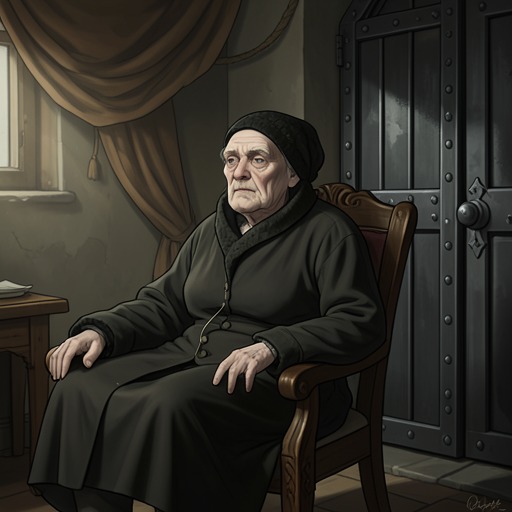
Bénédicte's first breast cancer diagnosis and treatment
L'Amour et les ForêtsBénédicte's first breast cancer diagnosis and treatment form a defining but largely hidden episode in her life: while enduring intensive treatment for stage IV disease, she continued to teach and minimized her illness so thoroughly that even colleagues close to her did not know it was cancer. Treatment ended in October 2007, but its effects were still evident when she met Éric the following spring. The episode also establishes a pattern in which her account of her own body could be displaced by other people’s interpretations of it.
Diagnosis and Treatment
Bénédicte was diagnosed with breast cancer in December 2006. The disease was serious and at stage IV. Her treatment involved eight courses of chemotherapy, followed by breast-conserving surgery and daily radiotherapy over seven weeks. The sequence was lengthy and demanding, and treatment did not conclude until October 2007.
The scale of treatment is significant alongside the way Bénédicte presented her condition. She kept working through most of the first cancer, maintaining most of her teaching at the lycée. The narrative does not present this as evidence that she was well: rather, her continued work coexisted with a grave diagnosis and treatment powerful enough to cause her hair loss. Her ability to sustain her professional routine helped keep the illness out of view.
Concealment and Appearance
Bénédicte minimized the seriousness of the cancer and did not tell her colleagues that it was cancer. Even those with whom she was close, including Amélie, understood her to have a less serious illness. The word itself remained unspoken among them. This concealment meant that colleagues could observe the visible consequences of treatment without knowing what lay behind them.
After her third chemotherapy course, Bénédicte lost her hair, eyelashes, and eyebrows. She obtained a wig that closely resembled her natural hair and also relied on professional makeup. The wig helped her preserve an appearance that felt like her own while she continued to work; after her hair grew back, she threw it away. In retrospect, the discarded wig became a point of conflict: Jean-François later referred to it when refusing to help her obtain new hairpieces during her second cancer. That later episode gives the first wig a double significance—as a practical response to treatment and as an object through which the history of her illness was turned against her.
Recovery and First Meeting with Éric
Treatment had ended in October 2007, but completion did not mean immediate recovery. When Bénédicte first met Éric at Le Nemours in March 2008, she was still convalescing. During walks, she had to stop regularly to regain her strength, and in the evenings she would collapse from exhaustion. Éric later recalled that she looked unwell at their first meeting. She did not tell him about the cancer, and they did not discuss it then.
The timing is important: Bénédicte’s first meeting with Éric occurred about five months after treatment ended, while fatigue still shaped ordinary activity. A chronology of her life places the end of treatment and her reading of Éric’s novel in October 2007, followed by the first meeting in March 2008 and a second meeting in September. The illness thus belongs not only to the period of diagnosis and medical intervention but also to the quieter interval of recovery, when its consequences remained present without being disclosed to a new acquaintance.
Family Responses and Later Context
The later account of Bénédicte’s illness places her first cancer within a broader conflict over whose judgment of her body would be trusted. During a subsequent illness, Jean-François repeatedly treated her physical complaints as exaggerated or psychological and urged her to continue strenuous walks despite her pain and fatigue. This later pattern does not establish the cause or course of the first cancer; it does sharpen the contrast between Bénédicte’s own bodily experience and the dismissive interpretations she faced in her marriage.
Her twin sister, Marie-Claire, provides a counterpoint to that dismissal. She recalls the extent of the first treatment and the persistent tiredness that Éric observed after it, while also describing how carefully Bénédicte concealed the diagnosis. The account therefore links medical history to the difficulty of being recognized as ill: the treatment was extensive, yet Bénédicte’s restraint and insistence on maintaining her usual responsibilities made the severity of her condition difficult for others to see.
Significance in the Narrative
The first cancer is a distinct episode, not the later cancer that ultimately ended Bénédicte’s life. Its chronology and treatment establish that she had already faced a major illness before her relationship with Éric began, while her silence about it shows how little of that experience she initially shared. The contrast between the severity of the treatment and the ordinary appearance she maintained makes concealment part of the event’s meaning, without reducing the illness to a metaphor.
The episode also makes the later signs of fatigue and physical distress part of a longer history rather than isolated complaints. Bénédicte’s first treatment ended in October 2007, but the March 2008 meeting finds her still depleted; later, the conflict over whether her symptoms deserved care becomes more acute. In this way, the first cancer establishes both a medical history and a narrative tension: Bénédicte’s body repeatedly registers what she does not readily disclose, while the people around her do not always respond by taking that evidence seriously.